Showing posts with label Photography Tips. Show all posts

Friday, November 9, 2012

Wildlife Photography Resource

If you’re like me you’re constantly on the lookout for ways to improve your photography and in this day and age there are a lot of sources for knowledge. Blogs, social sites, books, magazines… you don’t have to look far to find someone willing to offer you advice.

I recently purchased and read Jim Harmer’s “Improve Your Wildlife Photography” kindle edition book.  Like most photography books you will find that there is some rehashing of things you already know, but there were some nice tips included for my $3.99 investment. 

It’s not a long book (only 40ish pages), but that’s the beauty of e-publishing.  It doesn’t have to be crammed full of 200 pages of fluff to make the buyer feel like it was worth their money.

Have you read any good photography books or stumbled upon any worth while blogs lately?  Drop a comment below and share your most valuable resources.

Tuesday, August 7, 2012

The “Hummer Invasion”

My wife has hung various hummingbird feeders around the homestead each summer for as long as I can remember.  Evidently it’s earned her a reputation with our tiny feathered friends as this year we’ve been completely inundated by these incredible tiny giants.

Due to the shear number of hummer families now zooming around the house, the number of feeders has increased in an attempt to accommodate.  Being the territorial little buggers that they are, each of them prefer to lay claim to an individual feeder, exert most of their energy warding off trespassers and the rest of their time refueling.  We’re now sporting a feeder on nearly every window of the house and going through at least a gallon of sugar water EACH DAY!

The photo above is of the little female that’s declared the feeder stuck to my home office window as her own.  This gave me a unique opportunity to set the camera on the tripod, tether it to my laptop with Lightroom, and then proceed to snap (mouse click) some images from behind the desk which the diners have agreed is a “safe” viewing distance.

Tuesday, July 31, 2012

Fishing at Dawn

Sometimes you can get up before dawn in hopes of capturing that next incredible sunrise,only to end up wishing you’d have just stayed in bed when the sky refuses to cooperate.  Just because the sky isn’t giving you any help doesn’t mean it has to be considered a “busted trip”, however.  Try taking your eyes off the sky and start looking for interesting scenes illuminated by that beautiful morning glow. 

Friday, July 27, 2012

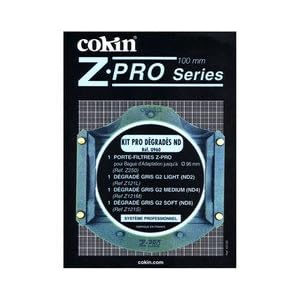
Cokin’s Z Pro Series Filter Holder

With incredible advancements in post processing software and techniques, most filters can be “faked” after the fact these days which helps reduce the amount of items you need to stuff into your gear bag.  There are a couple of filters that are still pretty nice to have, however.  Faking the effects of a polarizing filter is pretty much impossible and under certain conditions, neutral density filters are pretty handy to have in your bag too.

When I became interested in landscape photography, I purchased the Cokin Z-Pro Series Graduated Filter Kit.  It included a nice case, the filter holder and (3) 4”x6” graduated neutral density filters of varying degrees all wrapped in protective cloth sleeves.  What did not come in the kit was an adapter ring to mount the holder to the end of your landscape lens.

Most of the resources I read recommended to simply hold the filters in front of your lens so you had maximum control over where and how you placed the graduated lines in your shot.  So that’s what I did and simply left the holder in the bag.

Generally this “hold your own” technique works pretty well, but I managed to screw up more than a few shots at the same time.  Consider that you’re shooting longer exposures mounted from a tripod and then you manually hold a filter (or filters) up against the end of your lens.  Holding the filter too far away from the lens can result in photos with your fingers included, reflections from the filters themselves, the edge of the filter appearing in the frame, etc.  Hold the filter tight up to the lens and you can be introducing vibrations into the image that you’ve worked so hard to avoid with your tripod and remote.  So this last Christmas when I found the appropriately sized adapter ring in my stocking, I thought it was worth a try.

So here’s a scenario where the use of ND filters is pretty much a requirement – shooting into the sun.  The image is also a good reminder to prepare your gear the night BEFORE a sunrise shoot.  Notice 1) very dirty sensor (most of which was corrected with a few button presses by the in-camera sensor cleaner), and 2) smudges on the filters themselves which wiped right off when I cleaned them later.  Both of these quick cleaning tasks are things I should have done the night before. Sad smile

The large red arrows, however, point out a new problem introduced with the filter holder – vignetting. Sometimes it’s a cool effect to add to your photos in post, but not as cool when it’s embedded into your image and can be difficult to eliminate.  I should also point out that I’m shooting at 18mm which is wide, but certainly not as wide as most dedicated landscape lenses.  If you were shooting a little tighter, you’d probably be alright.  Needless to say, I removed the holder after only a couple of shots and went back to more handheld shots – some of which included my finger and the edge of the filter!

Another recommendation I’ve read but not yet tried is the use of gaffer’s tape.  Just tear off a piece, stick one end to the edge of your filter and the other right to your camera lens to hold it in place.  Assuming one can keep the tape out of the frame and the tape holds up so your filters don’t end up swimming in Lake Michigan, this could be my next experiment.

Do you have any experience with landscape filters?  Any tips on how to get the most out of them without shooting your fingers in the process?

Monday, July 23, 2012

Perfect (and Terrible) Vacation Weather

A few weeks ago I spent 5 days vacationing in Door County and enjoyed absolutely beautiful weather.  My early mornings began with temps in the low 60’s and then gradually warmed to the upper 70’s and low 80’s.  The winds were generally pretty light which made for calm conditions in the kayak and for the entire week, there was hardly a cloud in the sky.  That totally sucked.

Sunrise after sunrise and sunset after sunset I got myself and my gear into position to capture beautiful landscape images only to come home empty handed.  The above was my view the very first morning as the sun began to crest the horizon at Cana Island.  Interesting colors, but the lack of clouds meant there wasn’t much of a canvas onto which that light could reflect.

Compare the above to the archive sunset photo below which portrays nearly the same perspective.  Which one would you rather have hanging on your wall?

Here’s another archive photo example of how a few clouds can make for an interesting sunrise – this time at Pilot Island.

So while the weather was truly incredible, I was completely denied on the landscape front despite getting myself out behind my camera each and every day.

Ever find yourself wishing for some clouds?  If so, did you find a way to salvage the outing with other subjects?  Share your story.

Friday, June 1, 2012

Moose Peterson’s “Captured”– Adapting to Digital Content

I recently started reading Moose Peterson’s book, “Captured” and am really enjoying it.  Moose invites you into the interesting back story as to how he got his start as one of the leading wildlife photographers, shares some very useful advice on gear and photography technique and, of course, shares some of his favorite photos from his incredible career.  Definitely worth picking yourself up a copy.

This is the 3rd book I’ve committed to reading in an electronic format.  For me the jury is still out primarily because of the device I’m using (an older Android tablet with not so great resolution).  While I am in love with the idea of portability (Carry your whole library in your pocket? Who wouldn’t love the idea?), there are still those times when I’m just not sure.  I’m holding out for the release of the Windows 8 tablets later this fall (I’ve gotten my fair share of the iPad through my wife’s adventures) and hope that a better screen and form factor help bridge the gap.

How about you? Do you have both feet in the digital content camp or are you still looking for bookshelf space for your hardcovers and paperbacks?

Tuesday, May 1, 2012

"NO!!! Focus on the Bird! Not the foreground! THE BIRD!"

Last week I shared the story of the shot I "Almost" had for our wall as well as a series of images taken during the "Second Chance Round" when the other eagle of the pair took pity on me.  Today I thought it would be fun to show the entire series of images from that second attempt mingled with a little color commentary.  Here we go...

Dateline: Monday, April 2, 2012
Eagle River, WI

photographing a bald eagle snagging a fish from the river with a Sigma 150-500mm lens
1/1000 sec, f/8, ISO 1100 @ 500mm
Time: 8:35:42 AM
"Ah, FINALLY some sunshine after 4 days of gloom.  To bad we go home today.  There you are pretty girl.  How are you doing this fine morning?  What do you think about maybe helping me out a little here? Throw me a bone and give me something to shoot at before we have to leave..."

photographing a bald eagle snagging a fish from the river with a Sigma 150-500mm lens
1/1000 sec, f/8, ISO 1000 @ 500mm

Time: 8:36:08 AM
"Oh, crap! There she goes!  Ha, Ha! I'm ready this time.  Center of the frame? Check. Pan. Click. Pan. Click. Keep panning... Come on auto focus, wake up...."

photographing a bald eagle snagging a fish from the river with a Sigma 150-500mm lens
1/1000 sec, f/8, ISO 1800 @ 500mm

Time: 8:36:09 AM
"I've still got you! Keep coming... keep coming. Pan. Click. Pan. Click.  Camera's drifting down a little. You know what, this thing is pretty heavy.  If I shot this lens with any regularity, I'd really need to invest in a good monopod. Hey! Wake up! Day dream later!..... Ok...Get her back in the center.  Give yourself some buffer.  Why is she all blurry?  That pine tree behind her looks awesome though.  Can never have enough shots of pine trees.  Come on auto focus, come on ...."

photographing a bald eagle snagging a fish from the river with a Sigma 150-500mm lens
1/1000 sec, f/8, ISO 220 @ 500mm


Time: 8:36:11 AM
"Ok. Ok. Ok. Going up above the tree line.  Stay on her. Stay on her. Pan. Click. Pan. Click. Take it easy on the shutter, buddy.  Save that precious buffer for when you need it. Ha, Ha. seven frames per second... how lucky am I? Do people really spend hundreds of dollars for faster memory cards?.... Pan. Click. Pan. Click. Come back this way, girl. Don't be taking off down river on me.  Oh man! Look at that light. Sweet GLORIOUS light!  Now we're talkin!  I've got you right where I want you now!  And way to go auto focus!  I knew you could do it..."

photographing a bald eagle snagging a fish from the river with a Sigma 150-500mm lens
1/1000 sec, f/8, ISO 220 @ 500mm

Time: 8:36:12 AM
"Hey! That's a pretty good shot!  Nice cinematic crop will look good.. show off that impressive wingspan. And those eyes. How beaut.... Wait! She sees something! I think she sees som......"

photographing a bald eagle snagging a fish from the river with a Sigma 150-500mm lens
1/1000 sec, f/8, ISO 400 @ 500mm
Time: 8:36:13 AM
"HERE WE GO! HOLY CRAP! IT'S GOING TO HAPPEN!  Don't lose her now..... ah man, PAN! CLICK! PAN! CLICK! PAN!  STAY ON THE BIRD! Where'd that light go! Come on AF! Come on!"

photographing a bald eagle snagging a fish from the river with a Sigma 150-500mm lens
1/1000 sec, f/8, ISO 400 @ 500mm
Time: 8:36:13 AM
"I am NOT going to lose you now! Keep panning! CLICK. CLICK. CLICK.  PAN. CLICK. PAN. CLICK. CLICK. Dude, you're laying on the shutter release! Save some! How far are we from the water anyway? STAY ON THE BIRD!"

photographing a bald eagle snagging a fish from the river with a Sigma 150-500mm lens
1/1000 sec, f/8, ISO 560 @ 500mm
Time: 8:36:14 AM
"Who in the hell put a house right in the middle of this photo?  Man! Look at the drumsticks on that bird! I wouldn't want to be on the receiving end of those talons. Whew! What a great pose.  Too bad about the house though.  Did you know peregrine falcons can reach speeds in excess of 200 mph when in a dive? I wonder if there's any of those sausage patties left for breakfast? Sure am glad she isn't going that fast or I'd never keep up... FOCUS!"

photographing a bald eagle snagging a fish from the river with a Sigma 150-500mm lens
1/1000 sec, f/8, ISO 500 @ 500mm
Time: 8:36:14 AM
"I can see the river bank now and, hey, whatta know, that's almost in focus. Nasty shadow from her wing though. I wonder if I'll be able to lighten that up in Lightroom? PAY ATTENTION! PAN. CLICK. CLICK. PAN. CLICK. PAN. CLICK. CLICK... Is this really going to happen?"

photographing a bald eagle snagging a fish from the river with a Sigma 150-500mm lens
1/1000 sec, f/8, ISO 900 @ 500mm


Time: 8:36:14 AM
"TOUCHDOWN!!!!!!! NOW! LAY ON THAT SHUTTER RELEASE! CLICK. CLICK.CLICK. CLICK. PAN. CLICK. CLICK. CLICK. PAN.....Wait. Where's the focus? WHERE IN THE 'H' 'E' DOUBLE HOCKEY STICKS IS THE FOCUS?!?!?!"

photographing a bald eagle snagging a fish from the river with a Sigma 150-500mm lens
1/1000 sec, f/8, ISO 900 @ 500mm
Time: 8:36:14 AM
"NOT THE GRASS YOU PIECE OF #@!#$! THE BIRD! THE BIRD! THE #@!$%'n BIRD! FOCUS! FOCUS! FOCUS!"

photographing a bald eagle snagging a fish from the river with a Sigma 150-500mm lens
1/1000 sec, f/8, ISO 720 @ 500mm
Time: 8:36:14 AM
"Alright. Deep breath. Let's just take a 1/1000 of a second for myself here. Regroup. What am I doing wrong?  Well, you're drifting down a little bit.  Yeah, I know, but this thing really is sort of heavy with this monster 150-500mm you know. Quit your whining you big baby. I'm not whining. I'm just saying... Is you a man or is you a mouse? This really isn't helping.  Let's run down the checklist quick. Shutter speed? Check. Aperture? Well, if you opened it all the way up.... Hmm. What do you mean open it up all the way? The light's decent.  Auto ISO is still only at 720. What's wrong with that? Well, you know. I'm just saying... By the way, did you notice those two ducks in the upper right a few frames back? I think they're laughing at you. You know, the one where your horizon line is all kittywampus? And another thing... TIME'S UP!  Oh yeah, right! CLICK. CLICK. CLICK. CLICK."

photographing a bald eagle snagging a fish from the river with a Sigma 150-500mm lens
1/1000 sec, f/8, ISO 720 @ 500mm
Time: 8:36:15 AM
"There we go! Now things are coming into focus. Another beautiful, sharp shot of marsh grass.  That's going to look great hanging on the wall next to that shot of that pine tree from earlier.  Too bad there's that distracting blurry eagle in the background."

photographing a bald eagle snagging a fish from the river with a Sigma 150-500mm lens
1/1000 sec, f/8, ISO 560 @ 500mm
Time: 8:36:15 AM
"Another awesome shot of the grass.  I'm thinking maybe a nice triptych... grass, tree, grass? And what if we converted them to black and white? Maybe apply some cool filters or something? Oooooo... artsy! Hate to say I told you so, but if you'd just lift the camera up a little...  Ah, leave me alone. I'm admiring the grass."

photographing a bald eagle snagging a fish from the river with a Sigma 150-500mm lens
1/1000 sec, f/8, ISO 560 @ 500mm
Time: 8:36:18 AM
"PAN. CLICK. There! I've lifted the camera back up. You happy? Well, if you'd have focused on her head...and of course there's no fish... Oh, shut up!

Well, THAT was exciting!  I wonder how many of these are going to turn out? Think we got any keepers? Do you really think there are a few of those breakfast sausages left? Those were really good."

And there you have it. The full seven seconds in all its glory. ;-)

Until next time, keep click'n.
-Ken

Friday, April 27, 2012

Almost. It's Not ALWAYS About the Camera Gear

why its not always about the camera gear but how well you've prepared for the opportunity.
"Almost"

The above photo was included in Tuesday's final post in the "Eagle River Redux" series and I wanted to talk a little more about the emotion behind the image.

I've titled the image "Almost" in my catalog.  As in, I "almost" got the whole bird in the frame.  The photo was "almost" in focus.  The eagle "almost" caught a fish.  I "almost" had a photo worthy of hanging on the wall.  As a life event, it was a very exciting, memorable experience.  As a photography event, it was incredibly frustrating.  Frustrating because it was an opportunity that went unrealized.  

Photography is my form of "collecting".  A wall worthy shot of an eagle or osprey snagging a fish is something I'd really like to add to that collection.  Turning that wish into reality is all about making the opportunity happen and then executing when it presents itself.  Now the ideal opportunity would be to be sitting on the shores of the eagle's winter fishing grounds in Homer, Alaska with 300 or so of these magnificent creatures to photograph using the best equipment money could buy.  Right.  Well, that may be a while.

While this situation may not have been the ideal, its was a pretty good opportunity none the less.  I have an excellent camera in my Nikon D300s, I was lucky enough to be able to borrow my wife's Sigma 150-500mm lens, I'm sitting along the beautiful, peaceful Wisconsin River with not 300 eagles, but 2 - all of the pieces I needed to make it happen.  So what went wrong? In a word - me.  I wasn't well enough prepared when the time came to put it all together. 

"Well, maybe if you had the new $3K Nikon Dxxx or a $10K Nikon 600mm f/4?".  How many of you know THAT photographer?  The photography forums are FULL of them.  These are the people who pre-order the instant the "new model" is announced and can recite the spec sheet verbatim.  They'll cut you down because you're shooting with an "old" camera and tell you how great they are because of what's in their gear bag.  And then you look at their photos.  You think to yourself, "They could have just as easily taken those shots with the camera in their cell phone.", and then you feel sorry for all that gear going to waste.

Instead of blaming the gear, the lighting or the eagle for moving too fast, I'm going to go on record as saying I wasn't prepared enough when the opportunity presented itself.  I don't need a new camera (although a faster, longer lens would be nice ;-), but instead I need to continue to get myself in front of more opportunities.  I need to continue to study and understand those thousands of camera options and the conditions in which I will benefit from using them.  I need to focus on my technique and most of all I need to keep putting the camera to my eye and pressing the shutter release.

Maybe someday I'll find myself at the winter feeding grounds in Homer, Alaska with hundreds of eagle shots to choose from.  Or maybe, and more likely, someday I'll find myself looking through the viewfinder at that single bird on the river.  Both scenarios provide the opportunity.  It's up to me to provide the preparation.

Think about it.

Friday, March 2, 2012

A Message from Photographer Friendly

Every photographer appreciates that in order to take a picture, you need to have a camera.  Every boy scout/girl scout lives by the motto "Be Prepared".  Unfortunately, this particular photographer was never a boy scout.

There are A LOT of post processing tricks you can employ to save a troubled photo.  Removing "blurry", however, is not one I've mastered. That being said, today's friendly public service announcement is this:

"If you take your tripod out of your trunk for a thourough cleaning, please, please, PLEASE, don't forget to put it back when you're done."
This concludes this week's message from Photographer Friendly. 

Enjoy your weekend :-)

Tuesday, January 24, 2012

Finding your "Second Sight"

Now that we're past the "holiday hubbub", I thought I'd write a post targeted at those of you lucky enough to receive a new camera under the Christmas tree. It wasn't all that long ago that my own photography journey started in that very same way and I can remember feeling both excited and a little intimidated as well.

If you're like me, you've poured over the manual, found a few blogs to help your education and maybe even purchased a few books (there's some nice options in the "Ken Recommends" widget on the right side of my blog). I can remember feeling a lot more comfortable with the theories, buttons and dials at this point, but that didn't necessarily translate to my getting better pictures.

Sound familiar? If so, here's my advice. Put down the books, manuals and blogs and pick up your camera. Make sure you're battery is fully charged and just go take pictures. The subject of your photos doesn't really matter. It's the act of putting that camera to your eye and learning to see the world through a viewfinder that will make the difference. Try to pay attention to the light, shadows, reflections, etc. - all of those finer details that you've learned to take for granted your entire life. Learn to use them in your images to help tell a story and to help others see the world that their brains have learned to filter out.

What about post processing, publishing, printing, etc, etc.? There will be plenty of time for that as your journey is only beginning. Instead, invest your time in reviewing the images you've shot and determining what you like about them and/or how you might improve the next time you put your camera to your eye.

Have a useful tip of your own for aspiring photographers? Share your thoughts below. The more we share, the more everyone wins.

Until next time, keep on click'n.
-Ken

Monday, January 2, 2012

New Year. New Gear!

Question:  You're presented with a gift that turns out to be a Nikon 50mm f/1.8 lens.  What do you do?

Answer: You find yourself a couple of unwitting models to pose in front of the lights of the Christmas tree, open that baby all the way up and bask in all of that Bokeh goodness!

Thank you "Mrs. Claus" :)

What did YOU find under your tree?
Happy New Year!

Friday, December 16, 2011

Buying a Camera for Christmas? Clarify the Camera "Lingo"

Over the last several weeks I've had a handful of people asking me questions about camera terminology as they look to purchase a gift for Christmas.What is does this mean? What does that mean?  As the holidays approach, I thought I'd post a quick diagram that covers some of the basic terminology to help out those trying to make their way through the lingo.

Remember, after the wrapping paper is removed and the learning begins, don't forget to direct your new photographer to my blog.  Starting from the oldest posts to the newest, it will provide an excellent educational resource to help that special someone get the most from their new toy.

Happy Holidays.

Tuesday, December 13, 2011

Shooting For a Specific Medium?

I've previously mentioned that part of the motivation behind this blog was to not only share what I'm learning on my photography journey, but to continually expand my own knowledge into areas that will help me grow as a photographer.  After all, if you don't take the time to learn about a topic, how can you possibly write about it?

That was the driver behind the series of posts on the topic of printing over the last couple of months.  I was really interested in making sure that I and my clients were getting the best possible results from the time I pushed the shutter button to the time the print hit the printer tray (or the client opened the box).  Whether your using a commercial printer or generating your own output from home, it's still vital to understand what goes into making a good print.

One of the lessons we highlighted in this series was the need to adjust your processing for your targeted medium.  An image on a back lit computer display will most certainly look different than the same image printed on a piece of paper.  This past week, a client raised a question that caused me to consider not only how I might process the image differently, but how I might have actually captured it differently.


Here's the question - "Can I purchase this image as a canvas?".  Seems like a reasonable request, right?  Two concerns immediately came to mind.  First, I've personally not printed to canvas so I'm not sure what sort of processing corrections might be necessary to obtain the best result.  Regardless, I'm not too worried as I can lean on my commercial print partner to make the right decisions on my behalf.  Second, don't traditional canvas prints typically wrap around the edges? What does that do to the composition of my image?

After a little research I was able to determine that a traditional "extended" side canvas wrap will consume 2" from each side of your image.  That's not good news for this shot as you can see above.  Bye-bye sunshine.  "Well, maybe this processed image was cropped and the original will provide enough margins?". Nope.  "Well, maybe I can take it into PhotoShop, extend the canvas size and clone the sky into the new space?". Nope.  The position of the sun so close to the edge of the composition makes that a pretty difficult task. In fact, it's so close to the edge that just putting a print in a frame is going to impact the composition. :(

Evolution continues.  I can say with absolute certainty that when I captured this image in the early morning hours of October 10th, 2010 I carefully framed the image inside my viewfinder without giving a single thought about how the composition would be impacted by either the border of a picture frame or a 2" margin for a canvas wrap.  Consider me educated.

If you, like me, have been pushing the shiny silver shutter button and proclaiming, "Ugh. I make pretty picture" without first having a few key questions bounce around the ol' brain pan, here are a few parting thoughts.
  • Would this capture make a nice wall hanging? Yes? Provide adequate "buffer" at the edges of the composition to allow for the framing. 
  • Does your viewfinder provide 100% coverage and if not, how does that impact your composition?
  • Am I going to buy that frame at Wal Mart and shooting with a cropped censor? Yes? Consider how the image is going to look cropped in a traditional 5:4 ratio (4x5, 8x10, 16x20..).  If you can't make the crop you can either buy a bigger "traditional" sized frame and use a matte to save your bacon or begin your quest for a 3:2 ratio frame (4x6, 8x12, 16x24...).  If you find a good source, please let me know.
  • Would this make a nice canvas wrap? Yes? More buffer. 2" from every side!
  • Hoping to view your image on the cover of a magazine? Better rotate that camera and compose a portrait orientation.
  • I could sure make a nice calendar out of these!  Rotate again... back to landscape orientation.
  • Wouldn't this look awesome as a panorama? If you're 3,000 miles from home and the answer is even "maybe", then PLEASE set up your tripod and cable release and spend an extra 5 minutes.  Don't forget the buffer.
     
Do I vow to ask myself 101 questions before every shot? No.  Do I need to alter my shooting style some to improve my targeted output? Most definitely.  That revelation in itself should be enough to ponder in the 30 seconds between those low light sunrise/sunset shots to help improve my photography.

Do you have your own mental checklist before you "press the button"? Please share some of your checklist items using the comments below.

Until next time, keep click'n (with proper margins considered for your targeted medium).
-Ken

Friday, December 9, 2011

Export to Google+ from Lightroom

Having recently jumped on the Google+ train, I thought I'd share a few quick tips that might help make your Google+ life a little easier.

First, Google+ likes to use Google's own image library - Picasa.  No surprise there, right.  What you may not know, however, is that our friend Jeffrey Friedl, maker of a whole host of excellent LR plugins, has a plugin that will make exporting from Lightroom to Picasa a breeze.

Second, Google created a pretty slick interface for Google+ but decided that a toolbar to help you format your posts was just too much.  Instead, they give you a whole series of cryptic keystrokes you can use for that purpose.  Here's a link to a nice cheat-sheet to help you on your way.

Have any Google+ tips of your own? Sharing content you think we'd be interested in?  Drop us a quick note in the comments section below.  We'd love to hear from you.

Friday, December 2, 2011

Google+

Alright. So Google+ has been around a little while now and many of you may already be on that train.  While I have a passion about sharing my photography experiences through my blog and do syndicate the blog through other social networking sites like Facebook and Twitter, I'm not big into the whole social network scene.  Until now.

Google+ finally provides social networking functionality that makes sense to me by giving users the ability to target shared content to particular audiences which they themselves define.  Thanks Google!  It's very photograpy friendly too which doesn't hurt.

I found two very informative FREE videos from Kelby Training Online that are well worth watching - even if you have been in the Google+ space for a while.

10 Tips to Help Photographer on Google+ Part 1: Google Plus Basics


10 Tips to Help Photographer on Google+ Part 2: Google Plus Basics


I'm really looking forward to finding ways to leverage Google+ to be much more interactive when it comes to sharing photography experiences and learning from one another.  If you're on Google+ and sharing where photography is taking you, send me an invite.  I'd love have you in one of my circles.  You can view my Google+ page here.

Friday, November 4, 2011

The Art of Printmaking

I just stumbled upon a pretty cool and very useful blog dedicated to the art of printing.  As we've been reviewing the print process in the last several weeks, I thought I'd share.

"The Art of Printmaking"

Enjoy!

Tuesday, September 27, 2011

How NOT to Photograph Yellowstone & the Tetons

As one who has found a passion in landscape and wildlife photography, "passing through" the Yellowstone and Grand Teton National Parks quickly became an exercise in frustration. Spending sufficient time in the park was in direct conflict with our desire to get home after our long cross-country journey.  Despite having purchased some photography "Cliff's Notes" prior to our visit, not having the time to plan exactly when you would reach a particular location meant that you were at the mercy of whatever conditions you met when you arrived. Challenges that were further complicated by errors in judgement on my part and unfortunate road construction delays.
 

"En Route" - Shot through the windshield along the Lower Geyser Basin on the way to someplace else
Don't Reserve a Room
The original plan was to spend the night in Jackson Hole, wake up early and head straight to Mormon Row to capitalize on the morning light. As we were travelling with our pet parrots, plans for the entire trip were rather fluid. We stopped when we thought everyone had their fill for the day and it was a formula that was working. During our previous visit to Jackson Hole we had not had any issues finding a place to stay and as I'd calculated we'd be arriving before 3pm, I wasn't too concerned this time either...until we hit the road construction. After looking at stationary objects out the truck window for longer than any of us cared to, I decided to call ahead to make reservations for the night as we were no longer going to be arriving "early". Too late. The entire town of Jackson, WY was booked solid.

Enjoy the Detours
After finally arriving in Jackson and driving around looking for ANY vacancy sign, we finally realized it was a lost cause and ended up driving 40 miles south back down the mountains in the dark to a really nice little lodge in the town of Alpine. While we were all happy to have a roof over our heads and food in our stomachs, the 40 mile detour (through more construction I might add) ended up putting us off schedule for the remainder of the return trip.

Wait Until the Sun is HIGH in the Sky
How NOT to meter a buffalo
Now, instead of shooting Mormon Row in the morning light, we were shooting in the harsh, hazy light of high noon in between other visitors walking in and out of the frame. By the time we arrived at Oxbow Bend a slight breeze had kicked up and that incredible shot of Mount Moran reflecting in the river was not to be had. It was mid-afternoon before we even entered Yellowstone and we quickly realized there was no way we were going to be able to visit each of the locations we'd selected from Joesph Lange's book. In fact, it was taking so long to travel the 14 miles between point A and B or the 22 miles between B and C (the hundreds of people pulling 5th wheels planned ahead and were in no particular hurry), we were hard pressed to get shots of much of anything!

Embrace the Competition
By the time we arrived at the Lower Falls in Canyon Village, the sun was already pretty low in the sky. Walking up to the top of the path at Grand View we were greeted by a line of tripods and cameras already in place just waiting for the action to begin.  More people who planned ahead!  With just enough room to poke our own lenses through the crowd, we grabbed a few quick snaps before continuing on.

At the risk of sounding like a photography snob, I was AMAZED by the number of people walking up with their point-and-shoot or camera phone asking "This scenery is so beautiful.  Can you tell me how I can take a picture of it?" while they handed you their camera!  My beautiful wife, bless her heart, took pity on many of the poor souls and tried to help, but all I could think is "How do you come to one of the most photographic places on the planet and not figure out before hand how to take a picture with your camera?"

On the extreme other end of the spectrum, I saw more high end camera gear in our short trip through the parks than I ever would have imagined.  I thought the only place I'd ever see a $10,000 Nikon 600mm f/4 lens was on Moose Peterson's blog.  I saw three of them in one day!  There was also no shortage of photographers willing to offer us unsolicited advice. "If you want the best perspective walk up that hill over there and you'll get the whole river.", etc, etc.  Of course, not all of the advice turned out to be good.  For example, there was one gentleman who was none to shy about informing me and the rest of the onlookers that I was "wasting my time" taking shots of the lower falls in this light. "You can only shoot it in the morning".  I'm not sure if he picked me out because I was the only one at this stop shooting from a tripod and remote release (I was bracketing everything) or because I was shooting with a Nikon and he wore a Canon around his neck.

Don't Learn from Prior Mistakes
The next stop after Lower Falls was Inspiration Point. While there were a fair number of people on the observation deck, I found a better perspective (a very familiar one if you've seen photos of Inspiration Point) at the top of the parking lot which we had all to ourselves! FINALLY we were getting some decent light and the time to capture some spectacular views.  We shot and shot and shot until dusk finally descended upon us.

As we got back to the truck it was obvious that there was no way we were going to make our intended destination of Billings, MT that night.  Better call around and find a place to stay (see prior "Don't" - "Don't Reserve a Room").  After exhausting all of the suggestions of our trusty GPS in both the north (our intended exit) and east exits and not finding any vacancy, I hit pay dirt with the next closest entry on the list.  The Dude Motor Inn.  After I'd provided my credit card information and secured the room, I punched the address into the GPS and discovered we'd be just outside the WEST entrance - exactly the opposite direction of home! 


Between my wife expressing her dissatisfaction at my decision making and our two parrots questioning "Hurry?" from the darkness of the back seat, I was pretty sure I was the least popular person in the vehicle as we made our way out of the park.

A New Day
By morning, both my wife and the parrots had forgiven me as we loaded into the truck determined to still make it home in two days.With more than 1,200 miles between us and home there weren't many stops inside the park that day.  My wife drove, as she had nearly the entire trip, so I continued to shoot out the windows as we went.

In the end, we did compile a nice collection of park images, built some funny memories along the way (maybe not so funny at the time) and were truly inspired by the beauty that can be found in the Teton and Yellowstone parks.  Our next visit will NOT be simply "passing through".

Tuesday, September 13, 2011

Accidental Art?

Today's photography tip... don't forget to tighten down your ball head before taking your hands off the camera!  Or maybe not?

I'd like to think there are some creative neurons packed away in the ol' cranium somewhere that would allow me actually think of doing this on purpose, but the truth of the matter is it's purely accidental.  It reminds me of another of my favorite images "Flying Watercolors" which was also a random, yet artistic, "accident" :).

Here is another completely unaltered image straight from the camera depicting what I saw as I came upon the field of sunflowers that morning.  A visible haze was in the air and the sun was just starting to peek over the trees to wake these guys up.  How could I NOT stop?  Besides, I had to see what they were all looking at :-).

Friday, June 24, 2011

Wildlife Photography: Are you an Observer or a Participant?

It's a question that all wildlife photographers will face eventually... "Are you an observer or a participant?". You may be surpised by just how difficult that question is to answer.

My wife and I both love the outdoors, wildlife and, of course, photography.  You put the three together and naturally you will find yourself with an interest in photographing wildlife.  What is less obvious, however, is how those three interests are seemingly at odds with one another.
The Photographer and the Outdoors

If you're the outdoors type, you've undoutedly heard the saying "Leave nothing but footprints, take nothing but memories".  Personally, I like to think I subscribe to that philosophy and do my best to uphold it. There's no conflict for me to be sure that the empty water bottle or empty sandwich wrapper come out of the woods with me when hiking the trails.  Heck, I'll even pick up someone elses garbage if I should come across it.  That being said, the relationship we share with the outdoors is pretty easy to understand for most of us.

The Photographer and Wildlife

Now introduce the wildlife.  It's obviously a major component of the larger "outdoors" and, in my opinion, deserves the same level of respect.  Understanding this relationship isn't always as easy to comprehend, however.  For example, when at the park I see a 3 year old throwing rocks at the ducks, that to me constitutes disrespect and I'm likely to intervene.  If, however, I'm driving past a marsh and see a duck hunter shooting a duck from the sky, I'm able to accept it.  One assumes the later is hunting with the intent to eat the duck even though the argument could be made that both the rock throwing child and the lead throwing hunter are both taking enjoyment from the "sport" of it. 

The Photographer, the Outdoors, Wildlife and the Camera

Now introduce the camera and your desire to capture and share the beauty of the outdoors/wildlife.  For me, the introduction of the camera into the human/wildlife relationship begins to really complicate things.  First off, while my intent IS to shoot the subject, it's not likely to kill the subject and I'm not going to eat the photo.  The good news -  the subject doesn't need to fear me.  The bad news - they don't necessarily appreciate that fact.  The below osprey image is a case in point. 

This family's nest is atop a utility pole on an island on the Wisconsin River.  This same island also happens to be a recreational area containing biking and walking trails that pass right by the base of the utility pole.  From their nest, these osprey observe the comings and goings of probably hundreds of humans each day - most of whom probably have no idea that the osprey are even there.  And then there's me. 

On this particular day I watched one of the adults fly off the nest with a fish to perch atop a nearby utility pole to enjoy its lunch.  Its an action I've seen before and have come to appreciate that while the fish may fly to the nest to be handed off to the mate, its usually consumed on top of this other pole outside the nest.  The top of the pole is probably 40 or 50 feet off the ground with a walking path running parallel to it at a distance of approximately 30 yards.  After watching the osprey for about 10 minutes from further down the path, I started to make my way back up the trail which ultimately brought me closer to it.  Several bikers passed me going the same direction, a few joggers passed going the opposite direction... there was a lot of activity to which the osprey paid no attention.
Shooting with a 300mm lens, I was still on the path and approximately 50 yards away when I decided to take a few shots of the osprey enjoying the fish.  During this time, the osprey's attention was still focused on the fish and I played the role of observer happily rattling off shot after shot.  Then the osprey registered my presence and looked straight at me while I looked back at it through the viewfinder.  In the blink of an eye my role changed from observer to participant. 

Whether the osprey had decided on its own that lunch time was over or whether my presence influenced that decision, I saw it dip back and push itself up in to the sky with those mighty wings before flying right over my head with the full on stare of those yellow eyes you see in the photo above.  While I was excited to capture the image, I felt like the "birdie paparazzi" at the same time.  I felt like the 3 year old holding the rock.

The Photographer, Wildlife and other Wildlife

There's still one more relationship the wildlife photographer has to come to terms with and it may be the most important one - that is the relationship wildlife has with other wildlife.  If you're a reader of the blog, you know that my wife and I especially enjoy our outdoor avian friends.  She probably enjoys the song birds more than I while my greatest interest focuses on raptors.  Regardless, we were both pretty excited when a pair of American Kestrels took up residence in one of our nest boxes this spring.  We watched with enthusiasm while they perched atop the power line with their "snake dinner" (See above photo) or swooped down to snag a field mouse before heading back to the nest. 
Recently my wife took cover in a location where she was able to observe them coming and going into the nest and photograph their activities.  We suspect that we are on the verge of hatching some Kestrel chicks any day and the adults behavior has begun to change.  They are staying noticeably closer to the nest and, therefore, capitalizing on food sources in closer proximity.  When my wife captured a photo of the male returning to the nest with a baby song bird in its clutches, she found herself being pulled from the land observer into the realm of participant.  While she didn't intervene, it was impossible to prevent her attitude toward the Kestrels from changing.  Suddenly she wasn't as excited about their presence and not sure she'd be so happy to have them return next year.

So where does the observer/participant line exist for you if at all?  Are you comfortable with the "creed" to always observe the animal's needs before your need to "get the shot"?  Or do you, like me, struggle and find yourself justifying your actions (I wasn't the only one on the bike path....It wasn't MY fault)?  Do you cover your eyes when the lion brings down the baby wildebeest, accept it as the way of nature without prejudice, or find yourself somewhere beyond observer and closer to participant?

Please, use the comments section below and voice your opinions.  We'd love to hear from you.

Friday, June 17, 2011

Under the Tree of Life

Following up on last Friday's post, "To Shoot a Hummingbird...", I did try to add a little flash to my own hummingbird photography, but was limited to the on-camera flash as I don't yet own any speedlighting.  As you might guess, the on-camera flash was nowhere near fast enough to stop the motion of those unbelievable wings, but it certainly did help the rest of the image from under the shade of the "tree of life" as we've come to call it.